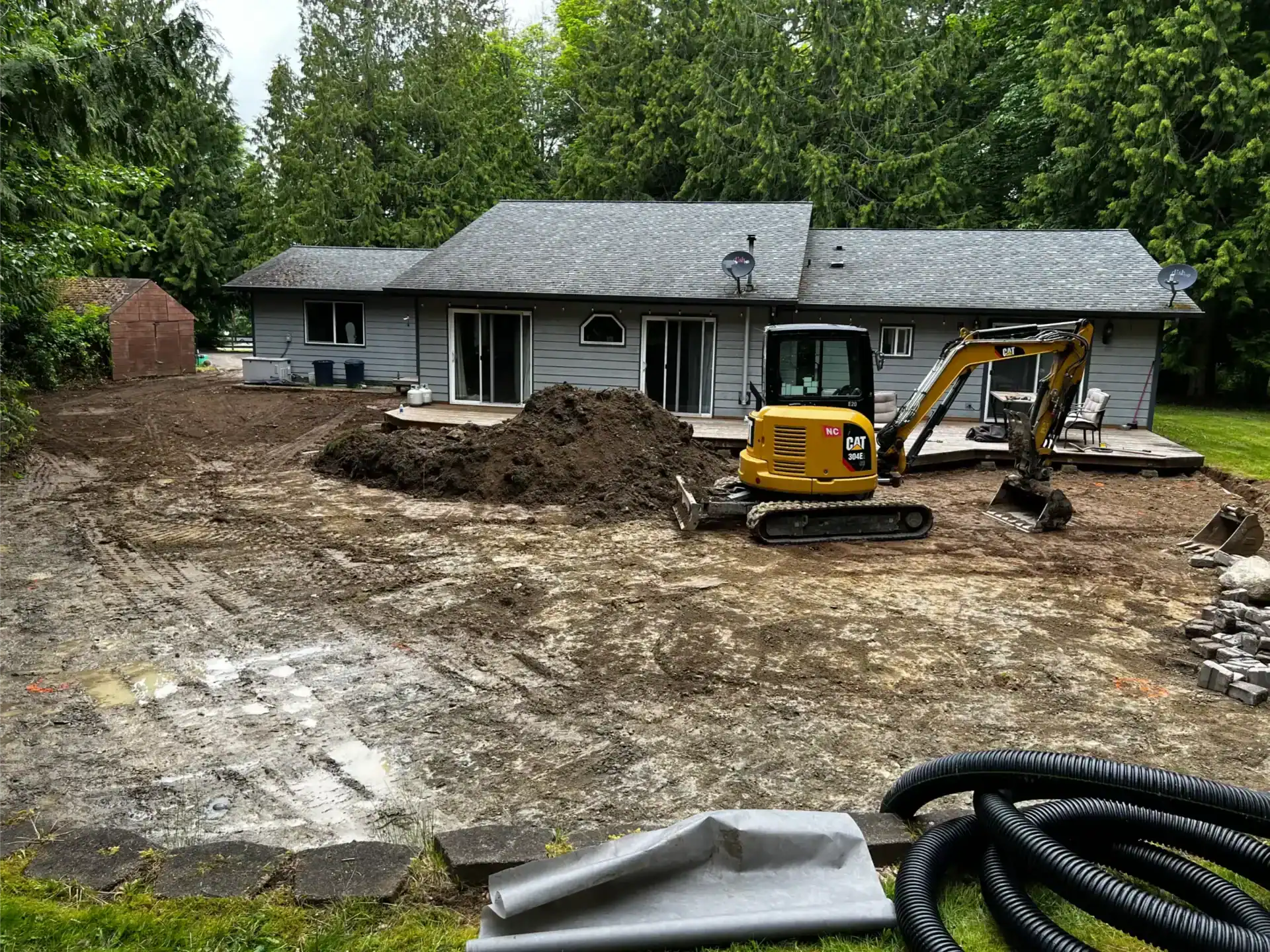
If you’re planning a construction project, home addition, or major landscaping overhaul in Skagit, Whatcom, or Snohomish County, you’ve probably run into both of these terms, often used as if they mean the same thing. They don’t. Understanding the difference between excavation and grading can save you from budgeting for the wrong scope of work, hiring a contractor who can’t complete your whole project, or running into drainage problems that show up long after the crew has left.
Here’s a clear breakdown of what each term actually means, how they work together, and how to tell which one your project needs.
What is Excavation?
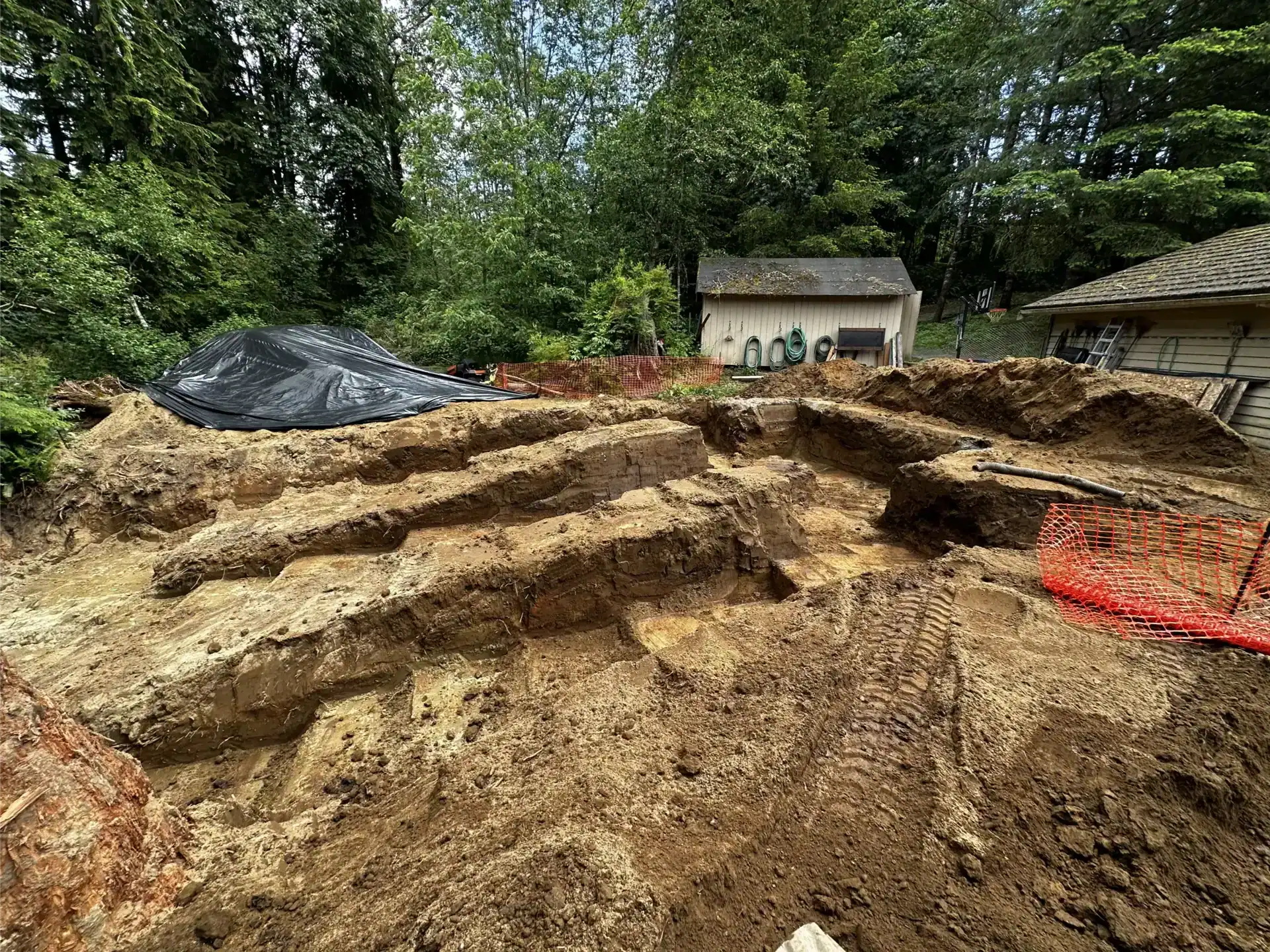
Excavation is the process of digging, moving, and removing earth – soil, rock, and other material – to create an opening or void. It’s the foundational “make space” work behind most construction projects.
Most homeowners and builders run into excavation work in a handful of common forms: digging out the void a foundation or basement will sit in, trenching for water, sewer, storm drain, electrical, and gas lines, installing a septic system, digging a pond or water feature, cutting footings for a retaining wall, or clearing out debris and unsuitable soil as part of a demolition project. The common thread across all of it: if a project requires removing material that’s currently there, it’s excavation.
What is Grading?
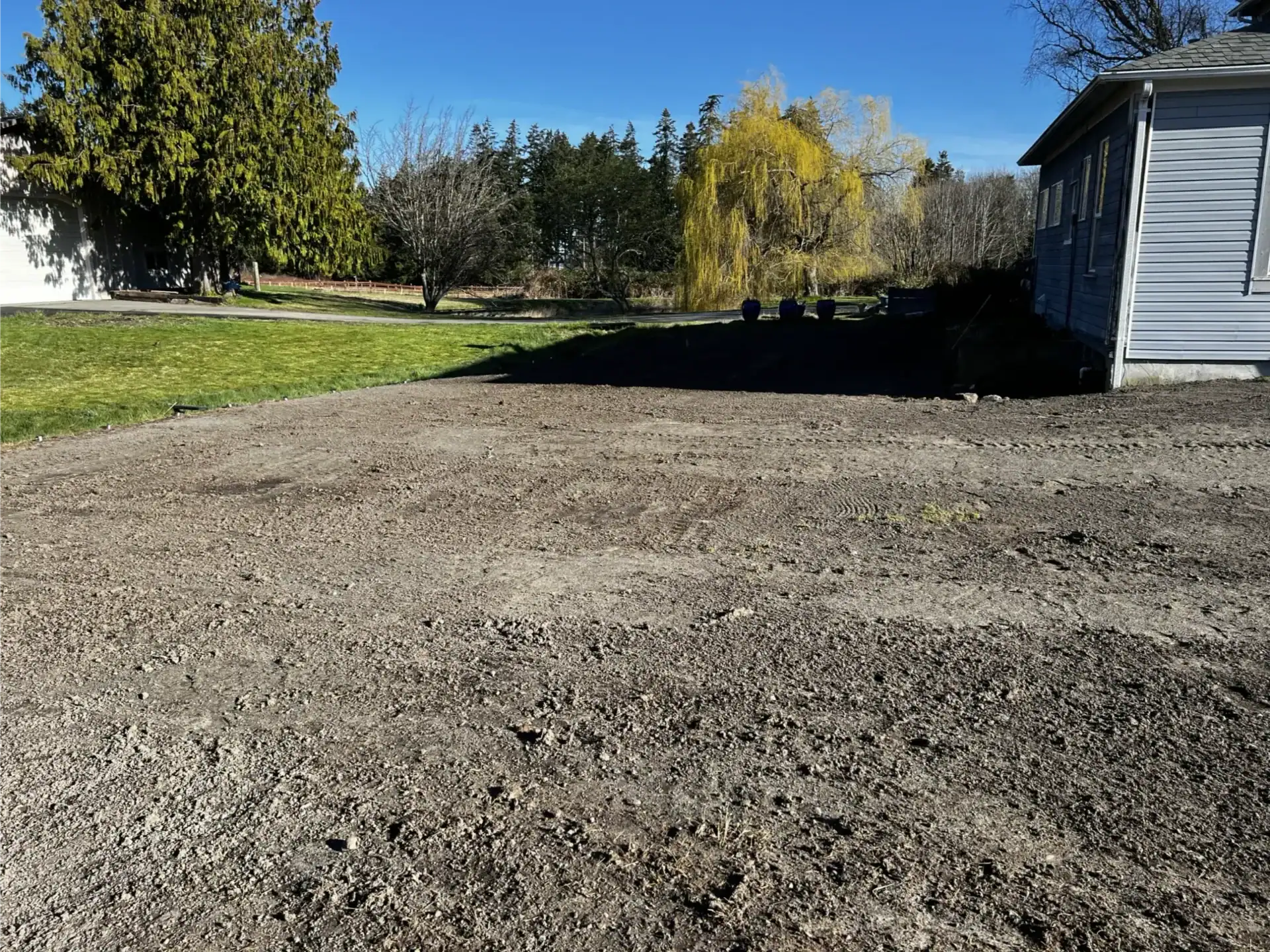
Grading is the process of leveling, shaping, and sloping the surface of a site to achieve a specific elevation profile, usually to control drainage, create a stable building pad, or prepare land for its next use.
It typically happens in two stages:
- Rough grading establishes the general shape and elevation of a site in broad strokes.
- Finish grading is the precise, final shaping done right before landscaping, paving, or construction begins.
In practice, grading covers work like preparing a building pad, shaping the base for a driveway or road, cutting drainage swales and correcting slope issues, prepping lawn and landscape beds, and doing the surface work that erosion control depends on. If a project requires shaping the land’s surface to establish the right contour and slope, not removing material to create a void, it’s grading.
The Core Difference, in a Nutshell
Excavation removes material to create space. Grading shapes the surface that’s left to control elevation and drainage.
Think of excavation as subtraction, digging out what needs to go, and grading as sculpting: working with the site’s surface to get the contours right.
How Excavation and Grading Work Together
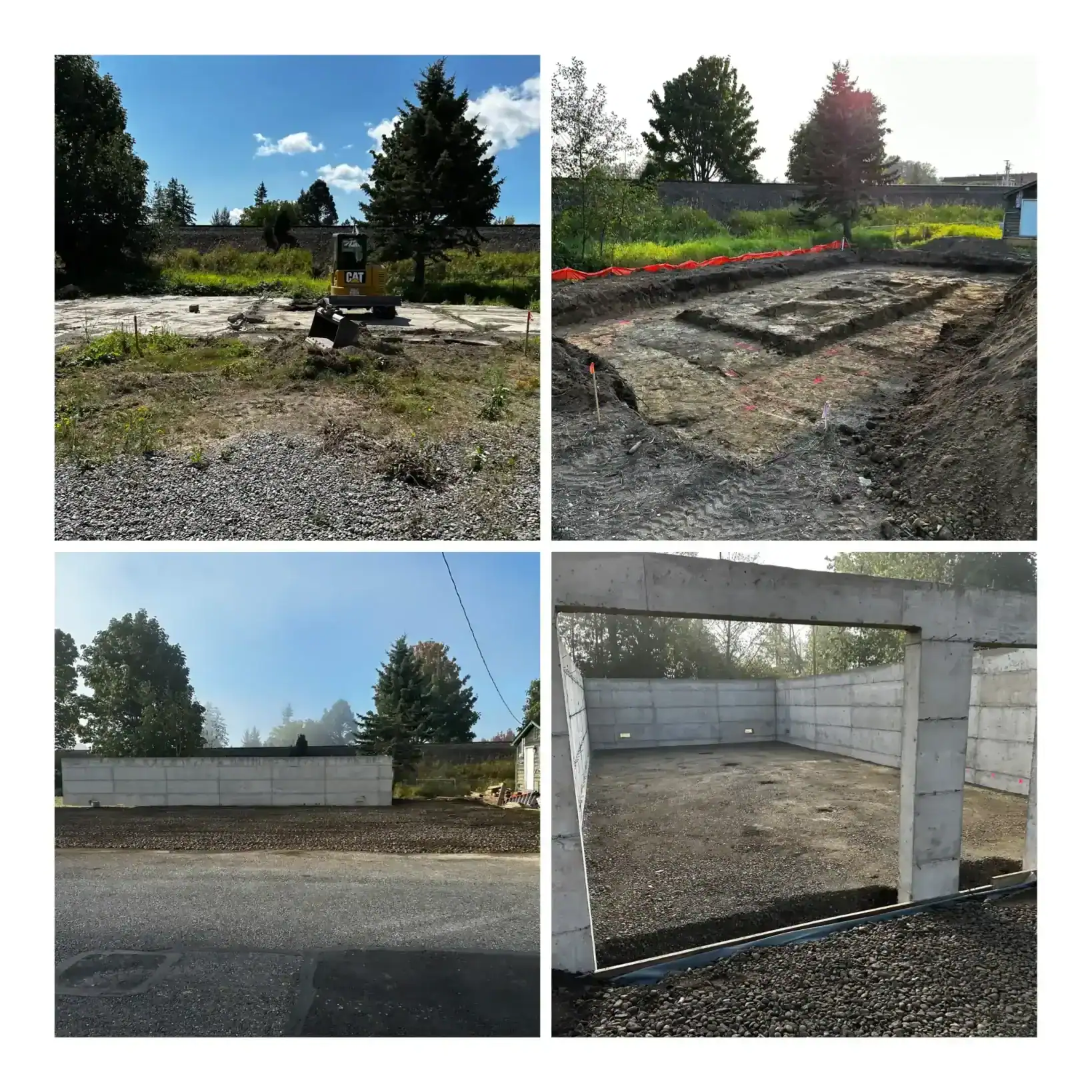
On most real projects, these aren’t two separate, disconnected phases; they’re sequential steps in the same process. Work typically starts with site or land clearing to remove vegetation, trees, and debris, followed by excavation to dig foundations, trenches, or remove unsuitable soil. From there, rough grading establishes the general site elevations before utility installation runs water, sewer, storm, and electrical lines through the site. Finish grading follows to do the final, precise surface shaping, and only then does paving, landscaping, or construction begin.
A contractor who only handles one half of this sequence often means bringing in a second crew, re-coordinating schedules, and hoping the handoff between the two doesn’t introduce errors that the other phase should have accounted for. That’s the practical reason most experienced site-work contractors (including our excavation and grading team) handle both as one coordinated process rather than treating them as separate jobs.
Why This Matters More in Skagit, Whatcom & Snohomish Counties
Site work in Northwest Washington comes with regional considerations that make getting the sequence right especially important. Soil composition and drainage characteristics can vary significantly depending on where you’re building; river valley, upland, and glacial till areas each behave differently, sometimes even across a single county, let alone across Skagit, Whatcom, and Snohomish. Add in the region’s high annual rainfall, and proper grading stops being optional; it’s what keeps water moving away from foundations, driveways, and septic systems instead of pooling against them.
Projects that disturb soil, especially near wetlands, streams, or steep slopes, often come with erosion control obligations, which is part of why having a Certified Erosion and Sediment Control Lead (CESCL) on the team matters for this kind of work. Permitting adds another layer: what triggers a grading or excavation permit, and which agency handles it, isn’t identical across Mount Vernon, Bellingham, Everett, or the surrounding counties. We help clients figure out what applies to their specific site rather than assuming one county’s rules apply everywhere.
Do You Need Excavation, Grading, or Both?
| Your Situation | What You Likely Need |
| New home or building foundation | Excavation, then grading |
| Drainage or standing water problems | Grading (often regrading) |
| New driveway, patio, or pad | Grading (possibly light excavation for base prep) |
| Water, sewer, or utility line work | Excavation |
| Major new construction or large addition | Both, done as one coordinated process |
If you’re not sure which category your project falls into, that’s a normal place to start — a short site visit is usually enough to tell.
Frequently Asked Questions
Is grading the same as excavation?
No. Excavation removes material to create a void or opening. Grading shapes and levels the surface that remains, usually to control drainage and elevation. Many projects need both, but they’re distinct types of work.
Do I need a permit for excavation or grading work?
Often, yes, but requirements depend on your specific project scope, site conditions, and which county or city you’re in. Skagit, Whatcom, and Snohomish Counties don’t all handle this identically. We help clients determine what permitting applies to their project before work begins.
Can one contractor handle both excavation and grading?
Yes, and in most cases it’s the better approach. Coordinating both under one team means the grading plan accounts for exactly what the excavation removed, with no gaps in communication between separate crews. Variant Excavation handles both as part of a single, coordinated process.
How do I know if my property has a grading or drainage issue?
Common signs include water pooling near your foundation after rain, soggy or eroding patches in your yard, cracks appearing in a driveway or patio, or a septic system that’s slow to drain. If you’re seeing any of these, a grading assessment is a good next step.
Getting Started
Whether your project needs excavation, grading, or both, the team at Variant Excavation has handled site work across Skagit, Whatcom, and Snohomish County for over a decade. Contact us for a free assessment – we’ll walk your site, explain exactly what your project needs, and help you navigate the permitting process along the way.